Today Terry Myerson and Joe Belfiore talked about the future of Windows and gave the world its first look at Windows 10. They demonstrated new features designed to make people and businesses more productive and announced that a Technical Preview build of Windows 10 will be available tomorrow through the Windows Insider Program. I know you’re probably wondering what this all means for you.
From a developer standpoint, Windows 10 continues the work shared at Build last April. Universal Windows apps and the ability to leverage the same code to deliver appropriately tailored experiences to multiple device types were the centerpiece of that announcement. They continue to be the cornerstone of the single Windows application platform announced by Terry and Joe today. The most important thing you should take from today’s announcements is that the best way to prepare for Windows 10 is to keep building universal Windows apps.
We have more work to do before we can share details about the Windows 10 developer experience, but you can already see that Windows 10 is designed to reach more customers and device types with a common user experience that includes several news ways for people to discover and engage with apps.

Windows 10
We continue to make progress in platform commonality, Store unification, and discoverability. Giving you the ability to easily publish to one Store across all device types and providing you a variety of new places in which to showcase your app functionality will increase your ability to reach new users and engage your existing users, in ways you couldn’t before.
Windows 10 will:
Build on our commitment to provide a common Windows platform and give you one consistent API layer with consistent UX design surfaces and flexible tools.
Enable Windows Store apps to run in a windowed environment on the desktop so that they perform better on a wider range of hardware.
Deliver one Store for all devices, making it easier for you to reach customers in consistent and compelling ways no matter what type of device they’re using. We’re also planning to make the Store more useful for corporations with volume app purchasing, more flexible distribution mechanisms, and the ability to create a custom or curated Store experience (note that the Windows 10 Preview contains the existing Windows 8.1 Store).
For more information about Windows 10 and the Windows Insider Program, check out Blogging Windows.
Where do we go from here?
The path forward for developers is simple. Today’s universal Windows apps provide the foundation for development on Windows going forward.
I know many of you will participate in the Windows Insider Program. Keep in mind that this is all prerelease software and you are likely to encounter a variety of issues at this stage:
We don’t recommend using Windows 10 as your primary OS for software development. The Windows App Certification Kit does not currently work on Windows 10 and there also a few bugs in the tools which mean that this combination can’t be used for ‘go live’ software development.
Don’t worry if you encounter issues running your apps. We have not yet done the extensive app compat work that we do for every Windows release, we are too early in the cycle yet. These problems will be fixed and we remain committed to app compatibility.
We haven’t integrated all of the visual designs into this build. As with previous previews of Windows the look and feel will be finalized as we get closer to the release date, so please don’t consider the UI you see, or the features you use, as complete. Things will change.
When you join the Windows Insider Program, you’ll get information on how to let us know what you find. We want your feedback.
And, if you haven’t yet, now is a great time to get started building universal Windows apps. Here are some links to some of the best resources to get started:
Official Documentation
Building universal Windows apps for all Windows devices
Universal Windows app samples - Official sample code package covering a broad spectrum of application developer scenarios.
Comprehensive Online Training
Developing Universal Windows Apps (C#/XAML) Jumpstart. Live online event 9/30-10/1. Available subsequently on demand, providing real world guidance to build universal Windows apps with C# and XAML.
Developing Universal Windows Apps with HTML and JavaScript Jumpstart. Comprehensive 12 part video training covering how to build universal Windows apps using HTML & WinJS.These resources will provide you the information you need to get started delivering outstanding apps using the same code to target multiple device types. Universal Windows apps are the future of the Windows platform.
Daniel Arzola is an art activist (‘artivist’) from Venezuela best known for his social artwork campaign, I Am Not A Joke (“No Soy Tu Chiste”) that aims to change negative perceptions of LGBT people. In early 2014, he teamed up with the It Gets Better Project to release seven images specifically targeting LGBT youth. These art messages have been translated into over 20 languages and have been showcased at art galleries and conferences around the world.
IGBP: Can you tell me a little about your background?
Daniel Arzola: I am from Maracay in the state of Aragua, Venezuela. My family is a very simple family. I have my mother and my brother. I grew up with this little family. I am an 'artivist.' I use art to educate on human rights, so I do ‘artivism’. (You know, it’s like art and activism). I am starting my studies in graphic design. I previously studied photography and drama, as well as classic art. I grew up in Venezuela, and now I live in Argentina because the situation in Venezuela is very hard in this moment.
IGBP: What are the some of the reasons why you moved to Argentina?
Daniel Arzola: In the last 2 years, four of my friends have been murdered. In Venezuela, there exist two kinds of human rights activists. There are those that work with the government of Venezuela but do not speak out against it or are critical of it. But if you are the other type of human rights activist, if you have the idea to be critical of the government, then they attack you. They attack you until you are not a Venezuelan, until you are not a man. They can start a persecution. In my case, I started to receive a lot of people saying things to me on social networks that they were going to kill me, that they know where I live, and things like that. The situation in Venezuelan is very difficult right now, like in the economic way. Venezuela has more violent deaths per year than any country in Latin America. Last year, there were 25,000 deaths by gunshot. So if you are gay in that situation, it can be worse unless you are friends with the government. In Venezuela there exist two kinds of citizens. If you are not with the government, your activism is ‘third class.’
IGBP: Have you found the situation to be much better in Argentina?
Daniel Arzola: To tell you the truth, Argentina was the first country I thought to come to. It was easy for me maybe because I had been here before, when I came to exhibit my work in the National Senate. I was here for about a month. I knew that there were people here who would help me. I lived in Venezuela for a time with the help of an organization who took me to Amsterdam to present at a Gay Pride. Before I was suppose to come back to Venezuela they asked me if I wanted to go back to a different country, and I thought of Argentina. Things here aren’t so bad like in Venezuela, and I didn’t really have to adapt. If I have the chance to go somewhere else, I would. Some people here have already treated me very rudely. But on the other hand, Argentina is the first Latin American country with gay rights, so I’m better off here. At this moment, I am doing a Master’s in Human Rights here to make my time here important.
IGBP: When did you realize that you had a passion for human rights?
Daniel Arzola: I had a very, very violent childhood. When I was a teenager, some people use to attack me everyday. One day, they tied me to a post, took off my shoes, and threw fireworks at me. Somehow I found the strength to escape from that situation. There are some people who don’t have the same luck or the same power that I had in that moment. I only know that I don’t want anybody in the world to go through the things that I did. With that feeling in mind, I started doing things for other people, thinking that if you, sadly, are going through this there must be a better way. Everything will pass and be transformed. You can use your abuse to make great things.
IGBP: So how did you specifically get involved in LGBT ‘artivism’? Where did you start?
Daniel Arzola: I believe that LGBT rights are human rights. This was the first struggle that defined me. People were attacking me for my sexuality in Venezuela, which is a very common result of inequality. It’s very interesting because even in the U.S. it appears that people have to respect you for your sexuality and maybe even homosexuality is legal. In Venezuela, there is no such thing. The first time that I walked with a guy by the hand was here in Argentina. If I do that in Venezuela, people can hurt me.
I started I’m Not A Joke because an eighteen-year-old boy from my city, Maracay, was attacked at his school. They thought he was homosexual. Three other guys doused him with gasoline and burned him alive just for being gay. And that happens in almost any area of Venezuela. So, I started to makes my images because there was a need. I had to become my own hero. I always thought when I was younger, “Oh, I need a savior, I need a hero.” One day, a voice told me, “You are a hero. You are your own savior. Save yourself.”
When I was 16, when these guys attacked me, they tore up and destroyed all of my drawings. So, I went 6 or 7 years without drawing anything. When I heard the story of Angelo Prado, the guy who was burned alive in my city, I felt the need to start drawing again. I knew that this time that my drawings could still be destroyed, so I started drawing on the computer. If people tried to destroy my art, I could just create another one, or another one. That is why I started I’m Not a Joke.

IGBP: Although you are no longer in Venezuela, how do you envision your artwork helping to make things better for LGBT youth in your country?
Daniel Arzola: I think that sometimes if something is hurting us, we need to take space. It’s the healthiest thing right now for me to heal my wounds. I need that from Venezuela as this moment. I’m still writing about my country, I still make a regular expedition to Venezuela, I still participate in activities from my university on Skype, but in this moment I need to be in a place where people don’t try to kill me every day.
IGBP: What do you think the situation is like for other LGBT activists currently working in Venezuela?
Daniel Arzola: It’s like being beaten by a police officer every day and you just try and defend yourself and look the other way. In Venezuela, there are a lot of survivors. Many of these people in Venezuela are just surviving.

IGBP: Is there currently a strategy within the LGBT movement in Venezuela to help LGBT people overcome these situations?
Daniel Arzola: That is very difficult because, like I told you before, in Venezuela there exist two kinds of citizens, people who are with the government and people who are not. That classification fits in every label you can imagine. There are LGBT people for the government, and LGBT people against the government. So there is a kind of war. They’re trying to polarize everything. I believe that LGBT rights are a political thing, but not a partisan one. Human rights don’t belong to a political party. They are for everyone. Perhaps that is a complex situation, in a way, but I think that we need to realize that we can work together. I try to do that.
One of my best friends is the president of an organization that is starting to petition the government for equal marriage in Venezuela. I do the graphic design for the organization and I Am Not A Joke has two posters that are the principle images for the equal marriage project. That guy is very “of the government.” He likes the thoughts and ideals of Chavez and Maduro, but he is still a friend and I work with him. It will take time to change this situation but we are working for the same.
IGBP: You have used your artwork in collaboration with It Gets Better Project. Do you see the IGBP playing a role in helping things change in Venezuela?
Daniel Arzola: Yes, I would really like to have the opportunity to make an exhibition from the illustrations I did for the IGBP and work with them in schools in Venezuela. To at least have the exhibition, I think, would be a really good idea.
When the IGBP contacted me, I only had the original campaign in three languages: English, Spanish, and Portuguese. When I first started creating the images, the IGBP told me they wanted a version of I Am Not A Joke that was dedicated to LGBT youth more specifically. So, we started to work and brainstorm together and we selected some themes. And I started to draw! It is very, very wonderful because the project is now in 20 languages. It’s a big experience to do something like that. It was very exciting. It showed me that I am able to work with other people to create my art and still feel free about it. I don’t feel in any moment like I’m in a crappy hell like before. At all times now I have the chance to express myself and say things like “maybe this, maybe not this.” The rest is history.

IGBP: What are the some of the ways I Am Not A Joke has been able to make an impact around the world?
Daniel Arzola: It’s incredible because never in my life, until last year, had I left Venezuela. In just 6 months, my project has been shared on 5 continents, even in conservative countries. The funny thing about it is that in Venezuela my work is not very well known. Up until last year, no one knew about my art until someone tweeted, “This is art. This is not a joke. I love this” and that person was Madonna. When Madonna said that, people in Venezuela started to know more about me. It’s a crazy thing! People from all over the world started to call me for interviews, people in Holland, in the United States, all over. Then another very famous person, Neil Gaiman, from Coraline and Dr. Who (he’s kind of a British Tim Burton), shared my work, too, and it was very amazing.
IGBP: What would you consider to be your greatest accomplish as a contributor to the LGBT ‘artivist’ movement?
Daniel Arzola: People always say or write, “We are all equals.” I never believed in that because I do not feel equal. I really like the experience of feeling different but feeling respected at the same time. I prefer to say, “We are all different but we have the right to be treated like everyone else.” I think that is the philosophy of I Am Not A Joke. I try to tell people that, to a certain degree, mockery is a model for violence; it’s the start of violence. At this moment, I Am Not A Joke is like a shield against homophobia around the world. Even in my country, some people try to use humor to do violence against people of different sexual orientations, and it’s hard for the victims to defend themselves. That’s a big, big tragedy.
Something like this just happened two months ago. A guy from Colombia, just sixteen years old, was having a lot of problems at school. His professor had taken his cell phone and saw a picture of him with another student. He told him, “That is my boyfriend.” Everyone in school started bullying him, so he decided to jump from a building and commit suicide. One of the last things he shared online was a picture from my campaign. The poster from my campaign said, “My sexuality is not a sin. It is my own paradise.” That shocked me and made me feel very, very sad. I realized that when he decided to say goodbye to the world, he decided to use my words. That was very, very hard for me. I was very sad until his mom in Colombia told me, “Thank you. I think that in some way he felt free in your words.” That was the moment that my sadness transformed into something else. So I dedicated an illustration to him that other young people students used in a strike in front of his school; they covered the school with my illustration for him.

IGBP: How do you think LGBT youth and their allies, like these you’ve mentioned in Colombia, can participate in making change happen in Venezuela?
Daniel Arzola: I don’t believe we can decide when we become victims, but we can decide when not to be victims anymore. If you have the capacity to break the cycle of violence, if you have the capacity to fight back, then you shouldn’t allow yourself or others to be beaten. That applies to LGBT youth or any other type of population in the world that is bullied. I believe it’s something about respect. I believe if you understand that everyone deserves respect and your sexuality doesn’t define anything in your life more than the person you love – not your capacities or your abilities or your future – when you understand that, I think in that moment everything will start to change. There are a lot of LGBT people out there feeling guilt that doesn’t belong to them. That needs to stop.
IGBP: Can you share with us a story of hope from Venezuela or from your personal life?
Daniel Arzola: Yes. I am a story of hope because I came from a place that is a disaster. I grew up in violence. I understand that there is more to life. Now I feel like I have the right to create the things I dream. I changed the most important person in my life with my art; that person was my mom. My mom was very homophobic in the past but now she is a big ally. She wears her I Am Not A Joke t-shirt when she goes to her classroom (she’s a teacher). When I started to see that I could change a person as difficult as my mom, then I had the power to change many other people out there. There is a thing we must understand: no matter where we are, we are always going to find two kinds of people, those that can open their minds and those that just don’t. We don’t have to waste time on people that don’t open their minds. We need to start to find the people that can do it. So, let’s go!
IGBP: What word of advice would you like to leave for LGBT youth reading this interview?
Daniel Arzola: I’d really like to make people believe that everything can change, even in a moment. It can be heartbreaking, but these are the words I have in my heart: don’t let the abuse define you. I think we can transform anything, and when you start to transform abuse into something else, you become an extraordinary human being.
Daniel is still living in Argentina while he pursues his Master’s in Human Rights. He continues to be involved in LGBT activism around the world as he expands his I Am Not A Joke portfolio. To learn more about his collaboration with the It Gets Better Project, click HERE. To purchase items from the I Am Not A Joke campaign, click HERE.
How to Go Green
Discover more fuel-efficient cars with Planet Green's green car article.
our tips should help you realize an increase in fuel economy for your current vehicle(s), there's no substitute for owning a car that's easy on gas from the day you buy it. If you're in the market for a new vehicle, there are many fuel-efficient choices across a variety of classes.
The most obvious choices for fuel-efficient vehicles are hybrids. Hybrids use a gasoline engine as their main power source, and they also have an electric motor for additional energy. The electric motor assists the gas engine during acceleration, instantly starts the gas engine at stoplights, and charges the batteries while decelerating and braking. There also are exhaust emission benefits from the hybrid system shutting off the gas engine while at stoplights. Further, purchasing a hybrid qualifies you for a tax credit. Depending on the vehicle, the credit can save you several hundred dollars.  The EPA estimates that the Toyota
Prius averages 60 miles per gallon
during city driving and
51 mpg on the highway.
Toyota Hybrids
The Toyota Prius was the first mass-produced hybrid car sold in the United States, and it continues to be extremely popular. In Consumer Guide®'s tests, we averaged 36.7-45.2 mpg. That's a far cry from the EPA estimates of 60 mpg city/51 mpg highway, but it's still better than just about any other vehicle we've ever tested. We'll have a more detailed chart of gas sippers on the next page.
Toyota's other hybrid vehicles include the new-for-2007 Camry midsize sedan. Like Prius, Camry pairs a four-cylinder engine with an electric motor. The Highlander midsize SUV also has a hybrid model. It combines its electric motor with a V6 engine and is geared to be a "performance" model. It's the quicker than conventional Highlanders, but it's also more fuel-efficient.
Toyota's premium Lexus division also offers hybrid models. The RX 400h midsize SUV is similar to the Highlander with its V6 engine/electric motor combination. Like the Highlander, it's meant to be a fuel-efficient SUV that also offers good acceleration performance. Also fitting this mold is the GS 450h. It also combines a V6 engine with an electric motor. Lexus pitches this midsize sedan as one that offers the acceleration performance of V8 engine but fuel economy of a small V6.
Other Hybrids
Though Toyota may have the largest overall lineup of hybrids, other automakers offer vehicles with gas-electric technology. Honda, Ford, and General Motors are hoping for a piece of this ever-growing pie.
Honda's hybrid lineup includes versions of its popular Civic and Accord sedans. Ford offers its Escape and Mercury Mariner compact SUVs. This year, General Motors' Saturn division introduced a hybrid version of its Vue SUV, dubbed "Green Line." Vue is scheduled to be joined in calendar 2007 by a Green Line hybrid version of Saturn's Aura midsize sedan. Chevrolet also is scheduled to get into the hybrid act in 2007 with a gas-electric Tahoe large SUV.

Saturn's first hybrid is the 2006 Vue Green Line.
Hybrids aren't for everyone, however. They tend to carry a steep price premium over conventional gasoline vehicles. For example, a front-wheel drive Toyota Highlander with a conventional V6 engine has a base price of $25,940. The same vehicle in hybrid form starts at $32,490. Factoring in tax credits and fuel savings, it would take most hybrid owners five years or more to recoup the cost difference between their vehicles and conventional ones. However, with owning a hybrid comes the personal satisfaction that you're doing something positive for Mother Nature, and that's something not for sale.
Efficient Conventional Vehicles
Subcompact cars are an emerging force affecting the American automotive landscape. These small vehicles typically have wheelbases of 100 inches or less. Many are available in a hatchback body style, which enhances cargo versatility. Sedans also are available.
The Honda Fit, Suzuki SX4, and Toyota Yaris are all new vehicles for 2007. Chevrolet's Aveo sedan was redesigned for '07, and the Hyundai Accent and Kia Rio were redone in 2006. Toyota's youth-oriented Scion brand will replace its subcompact xA hatchback and xB wagon in calendar 2007.
In addition to these vehicles being frugal at the pump, subcompacts also don't have steep bottom lines. The Chevrolet Aveo5 hatchback starts at less than $10,000, and most subcompact cars won't break $17,000, even when fully loaded. With this market segment getting more attention from shoppers, automakers are designing these vehicles to not only be fuel efficient, but also stylish, refined, and fun to drive.
But again, such small cars don't suit everyone' s lifestyle. Fear not, for there are other vehicles that have conventional engines and incorporate technology to help them be more fuel-efficient. One such technology is cylinder deactivation. An onboard sensor is programmed to sense certain driving conditions, such as coasting, cruising, or deceleration. It will then tell the engine to shut off half of its cylinders. Less active cylinders mean less fuel is being burned. This fuel-saving technology is employed by several automakers, including DaimlerChrysler, General Motors, and Honda.
On the next page, we'll give you a list of vehicles that are among the thriftiest you can buy, conventional or hybrid.
The Most Fuel-Efficient Vehicles By Class
Here is a list of fuel-efficient vehicles, both conventional and hybrid, as rated by the EPA and in Consumer Guide® road tests. The list is in alphabetical order. It doesn't include every single vehicle, but these vehicles are the cream of the gas-sipping crop.
| Vehicle | Class | Transmission | CG mpg | EPA city/hwy |
| Acura TSX | Premium Compact Car | Manual | 27.3 | 21/30 |
| Ford Escape Hybrid | Compact SUV | CVT | 28.4 | 33/29 |
| Honda Accord Hybrid | Midsize Car | Automatic | 27.5 | 28/35 |
| Honda Civic Hybrid | Compact Car | CVT | 38.0 | 49/51 |
| Honda Fit | Subcompact Car | Manual | 35.6 | 33/38 |
| Kia Spectra | Compact Car | Manual | 28.5 | 25/33 |
| Mercury Mariner Hybrid | Compact SUV | CVT | 28.8 | 33/29 |
| Toyota Camry Hybrid | Midsize Car | CVT | 28.5-31.2 | 40/38 |
| Toyota Corolla | Compact Car | Manual | 28.5 | 32/41 |
| Toyota Highlander Hybrid | Midsize SUV | CVT | 22.8-26.4 | 31/27 |
| Toyota Prius | Midsize Car | CVT | 36.7-45.2 | 60/51 |
| Toyota Yaris | Subcompact Car | Manual | 34.8 | 34/40 |
In this age of continually climbing gas prices, consumers need to learn how to save gas any way they can. With the tips outlined in this article and in the above chart, saving fuel and money can be easy.
How to Improve Your Fuel Economy Consumer Guide®'s recommendations for getting better fuel economy may seem like no-brainers, but they really can make a difference. Our strategy is a three-prong approach: Alter your driving style, maintain your vehicle, and modify your driving mentality. Combine any of these tips, and you should start seeing an improvement right away.
Alter Your Driving Style
S-L-O-W D-O-W-N. Going fast is so tempting. Not only do we do it to keep up with the flow of traffic, but if we can save even five minutes, it seems worth it. But if you're on the highway, driving 60 miles per hour instead of 70 mph will save you 2-4 miles per gallon over the duration of your trip.
Take it easy on the throttle. Don't accelerate quickly or stomp on the brakes. Coast to a stop. You'll save on fuel as well as wear and tear on your brakes, which will save you even more money.
Shut down. If you're waiting somewhere for a while, like at a train crossing for instance, turn off your engine. Even if it's just for a minute, it can make a difference in your fuel economy, especially if you drive in the city a lot.
Don't warm up your vehicle for more than 30 seconds. This is a tough one, especially for us here at Consumer Guide®, where Chicago's frigid winters are a way of life. Thanks to technology, however, most modern fuel-injected cars only really need 30 seconds to warm, and hot air can start blasting into the cabin very shortly thereafter.
Windows up. Again, this is tough, especially on pleasant days. But having the windows down creates aerodynamic drag that causes an engine to work harder. On the highway, this can decrease fuel economy by up to 10 percent.

Keeping your tires properly inflated will save you gas.
Maintain Your Vehicle
Check your tire pressure. Making sure your vehicle's tires are set to the recommended pressure can increase fuel economy by as much as 3.3 percent.
Breathe easy. Next time you get your oil changed, have the air filter checked as well. Replacing a dirty air filter with a clean one can save up to 10 percent on fuel costs.
Make sure your vehicle is in top running order. Read your owner's manual and follow the manufacturer's recommended maintenance schedule. If it's time for a tune up, do it and you can realize up to a 4.1 percent increase in fuel economy.
Buy the right gas. Your owner's manual will list the correct octane gasoline you should use for your vehicle. Purchase whatever is recommended and no more. Premium-grade fuel is more costly and won't improve economy in vehicles designed to run on regular.
Lighten up. The less weight in your vehicle, the better your fuel economy. Clean out that trunk!
Grease up. Using the manufacturer's specified motor oil, and changing it per factory recommendations, can improve fuel economy as well.

Keep your trunk empty. Carrying extra cargo
around might be costing you at the pump.
Modify Your Driving Mentality
Combine trips. Don't run out two or three times a day. Hit all the stores you need to visit at once, and if possible, go to shopping malls where you can park and walk to several stores at the same time.
Let someone else drive sometimes.
Get some exercise. If you have the time and your destination is close, walk or ride a bike.
Cool down. Gas up on cool mornings. Fuel is denser when cold. Gas pumps measure by volume, so if you pump when it's cold, you get more gas for your buck.The Biggest Savings
For most of you, altering your driving style and maintaining your vehicle might seem like enough to increase fuel economy. You're likely to see perhaps a 10-15 percent improvement in fuel economy by doing those two things. However, you can save the most money by changing your driving mentality.
Consider this: If you get 16 mpg right now and you follow the steps outlined in "Altering Your Driving Style" and "Maintain Your Vehicle," you're likely to notice a 15 percent improvement in your fuel economy. That means you'll average 17.6 mpg. Over a 12,000-mile year, that's a cash savings of about $200.
By following the steps in "Modifying Your Driving Mentality" you could easily reduce the miles you drive each year by 1000. All else being equal, reducing the miles driven per year from 12,000 to 11,000 will save you $375. Combine the two, and you can reduce your annual fuel costs by $500 or more.
Next, we'll look at what you need to know about buying a more fuel-efficient vehicle. We'll look at gas-electric hybrids, as well as conventional vehicles that will allow you to squeeze out the most miles per gallon.
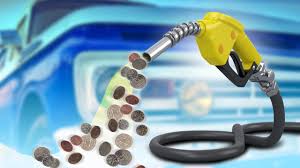
With gasoline prices continuing their wild fluctuations, many consumers are demanding more fuel-efficient cars and trucks. Automakers have responded by offering gas-sipping subcompact cars and gas-electric hybrid vehicles. But what are consumers to do when they have four years of payments left on a gas-hogging, V8-powered SUV?
 Surprisingly, there are a number of ways that new or used vehicle owners can improve overall fuel economy by as much as 20 percent. For a vehicle that averages 18 miles per gallon, that's an improvement of almost 4 mpg and an annual fuel savings of $400 or more. Consumer Guide's® fuel economy improvement tips don't just apply to vehicles that use the most gas. Even if you have a fuel-efficient vehicle, you can still use these guidelines to get more mileage between fill-ups, thereby keeping more money in your pocket.
The Auto Editors of Consumer Guide® recommend a comprehensive approach in order to achieve the greatest fuel economy savings. Don't let that "c" word scare you. Not only are our tips easy to follow, you'll see results almost immediately. In this article, we'll cover:
How to Improve Your Fuel Economy
We'll show you a comprehensive set of driving tips that will help you improve your vehicle's fuel economy. These tips are easy to follow, and you should realize a near-immediate improvement in fuel economy. We recommend a three-step approach: Alter your driving style, maintain your vehicle, and modify your driving mentality. We'll also show you just how much you can potentially save, both in fuel and money.
How to Buy a Fuel-Efficient Vehicle
We'll explain the factors you should consider when selecting a more fuel-efficient vehicle, whether you're looking for a hybrid or a conventional vehicle. While hybrids may be the most efficient overall, they also tend to be expensive. The extra cost over a frugal conventional vehicle may take years to recover in fuel savings. As such, a small, subcompact car may be a better fit for your needs. We'll provide you with a list of fuel-efficient vehicles rated by both the EPA and Consumer Guide®

As a college student, I had my fair share of sleepless nights. But as I matured (and learned from the adverse affects I suffered because of those late nights), I began to realize that at the core of a healthy, long life is good sleep. Surprisingly, what we hear about health usually revolves around exercise and nutrition; the truth about sleep—one of the most important factors to attaining vitality—is often left out of the mix.
Losing sleep is certainly not something to be taken lightly. An occasional night of tossing and turning is normal, but continued patterns of this behavior can cause real problems in your ability to function normally. Research shows that inadequate sleep can have disastrous effects on your weight loss efforts, impair your concentration, and even mimic the symptoms of impaired glucose tolerance (which can lead to diabetes and hypertension).
Your mood also suffers when you don’t get enough shut-eye, causing you to become disoriented on the job, fatigued behind the wheel of a car, or irritated at home. But more importantly, these mood swings can affect your relationships with others, and even lead to depression.
But the good news is that, starting tonight, you can improve the quality and quantity of your sleep. Here are 7 ways to get back on track. You’ll be sleeping like a baby in no time!
1. Create the right environment. Get your body and mind in the habit of using your bedroom for sleeping. If you frequently sit in bed to pay your bills, do your homework, watch television, eat, talk on the phone, etc., your mind will expect that the bedroom is for daytime activities. Instead, create an environment that is suitable for sleeping. Equip your room with soft lighting, comfortable bedding, and relaxing music. Other tricks include turning the temperature down a few notches, and turning the clock away from your view. Recent studies reveal that watching your sleep time vanish into the morning hours only makes you more anxious and less able to fall asleep.
2. Get yourself into a routine. This is especially hard for people with wavering, active schedules, like students and parents. On busy days, it is difficult—but crucial—to be firm with a routine. If you normally don't fall asleep until the wee hours of the morning, or if you don't have a sleep schedule at all, try going to bed a half an hour earlier each week, or set a time to get in bed and stick with it. Eventually your body will get used to going to sleep at that time and it will begin to come naturally.
3. Limit food and beverage intake before bed. As you lie down to sleep, acids in the stomach level out, making heartburn and indigestion more likely to occur. Also, your metabolism increases slightly to digest food, which can also raise your energy level. Stop eating at least three hours before your scheduled bedtime. If you must snack on something, keep it small, and avoid high-fat foods, which take longer to digest. Instead, have a granola bar, some toast, or a small bowl of cereal, but keep your portion small. Say no to stimulants like caffeine and nicotine, which can raise blood pressure and energy levels. Alcohol may be a depressant, but after its sedative effects wear off, your sleep patterns will suffer.
4. Consider a natural approach. Certain herbal teas can help you relax and fall asleep. Chamomile is a popular herb that slows the nervous system and promotes relaxation, for example. As always, consult your health care provider, use herbs and other supplements only as directed, and make sure to read labels. Some herbs may react with certain types of medication or cause adverse effects in individuals with liver disease, Parkinson's disease, and pregnant or nursing women. Other liquids, such as a small glass of warm milk, may also help.
5. Know when and how to nap. When energy levels drop around 3-5 p.m., most of us desire a little shut-eye. Napping is okay, as long as you do it wisely. Most sleep counselors recommend napping for no longer than 20 minutes. Exceeding 20 minutes could leave you feeling groggier and make it harder for you to fall asleep at bedtime. If you know you have to stay up late, or if you have an erratic sleep schedule (especially new moms), take a nap during the day. You’ll be more productive and in a better mood.
6. Take control of your worries. Let’s face it—most of us lead very stressful lives. Stress, surprises, and changes can take a toll on your sleep habits. Schedule some downtime each day for meditative activities like stretching or a hot bath. Try to decrease your brain activity before bed by writing down your thoughts in a journal and closing the book on the day. If thinking keeps you up at night, get out of bed and try to be productive. Deal with those thoughts (pay the bill that you are worried about forgetting, make a to-do list, etc.) in a positive way, and come back to bed when you’re ready to sleep.
7. Get a check-up. If you toss and turn most nights, it may be time to see a physician. You could be suffering from one or more sleep disorders, including insomnia and sleep apnea. The sooner you find out what's wrong, the sooner you can fix it. Sleep disorders are dangerous to your health, so if you suspect something is wrong, tend to it immediately.
Would there ever be scope for our nation's engineers and entrepreneurs to put their collective might into creating a fully British load-lugger?

A British version of the Mercedes-Benz Sprinter could benefit local authorities
I noticed the other day that Transport Minister Baroness Kramer announced that more than 1000 local authority vehicles, from buses to fire engines, will soon be cleaner and greener.
That’s a good thing of course. Apparently 17 local authorities have been awarded grants for a wide variety of cutting-edge, pollution-reducing technologies that will now be fitted to 1163 vehicles.
In addition, the Department for Transport also announced the allocation of an additional £50,000 of funding to help local authorities monitor the results of their clean technology projects.
Indeed, the Clean Vehicle Technology Fund adds up to £5m. But is that what we need to be doing, chucking more money at local authorities? They seem to be among the worst spenders of money in the country.
That’s a side issue, because what bothers me more than anything is that the buses, vans, police cars and ambulances used by our public services seem to be, by and large, built abroad. At the very least anything bought with tax payer’s money ought to be built here.
Several years ago a friend who used to rebuild cars for a living, so knew what was involved in making something, could not understand how this country didn’t make its own van. I know that Vauxhall does, but I am idealistically referring to a British-owned company.
I would not want to create another state-owned BL scenario because we know how that ended. A vehicle has to be good in its own right and commercially successful rather than state subsidised.
Maybe what I am suggesting is that the last thing I want to read about is yet another British car company making half-a-dozen bespoke pseudo-supercars that cost a fortune and won’t be around for the long haul.
So this is my call for our engineers and entrepreneurs to build a better van. Believe me if you do, they will come and buy it. Then the local authorities will be obliged to at least consider it.
So are you bothered about where the next British van is coming from?
